
Most cities let you stop a leak or secure storm damage first, but the permit clock starts right away, and filing late can cost a double fee.
A pipe bursts overnight and water is cutting into the ceiling.
A storm peels shingles and the attic is open to rain. A porch post leans hard enough that nobody wants to walk under it. In those moments the first job is to stop the hazard—shut the water, tarp the roof, brace what might fall—not to sit in a permit portal drafting a scope description. Plenty of U.S. cities recognize that. They allow emergency stabilization first, then require you (or your licensed contractor) to file a notice or permit application within a short, published clock. That is not a free pass to remodel forever, and it is not the same thing as a stop-work order or the flood-zone “50% rule.”
PermitCove is an independent homeowner guide, not a government agency. The city and county examples below come from official pages we checked. Your Authority Having Jurisdiction (AHJ) may use different deadlines, forms, and license rules. Confirm every step locally before you act. See our disclaimer.
What “Emergency Work” Usually Means
Emergency work, in building-department language, is work that would normally need a permit but must start right away to prevent imminent harm to people or property. Think unsafe structure, active gas leak, failed heat in winter, or storm damage that will get worse if you wait for plan review. It is not “we always meant to remodel the kitchen and this is a convenient weekend.”
New York City’s Department of Buildings frames it under Administrative Code AC 28-105.4.1: emergency work is work that requires a permit but is performed to relieve an emergency condition. Examples on the city’s own page include sidewalk sheds or fences to protect the public from an unsafe condition, stabilizing unsafe structural conditions, gas leak repairs, replacing required parts so a combined standpipe/sprinkler system can operate, and repair or replacement of heating or hot water equipment that serves residential occupancies during the heating season (or education occupancies between November 1 and May 1).
Chicago’s Department of Buildings describes the same idea more simply: repair or stabilization that requires a building permit, but must be done on an emergency basis to prevent imminent harm to people or property, may be performed before the permit is in hand—subject to follow-up filing and code compliance.
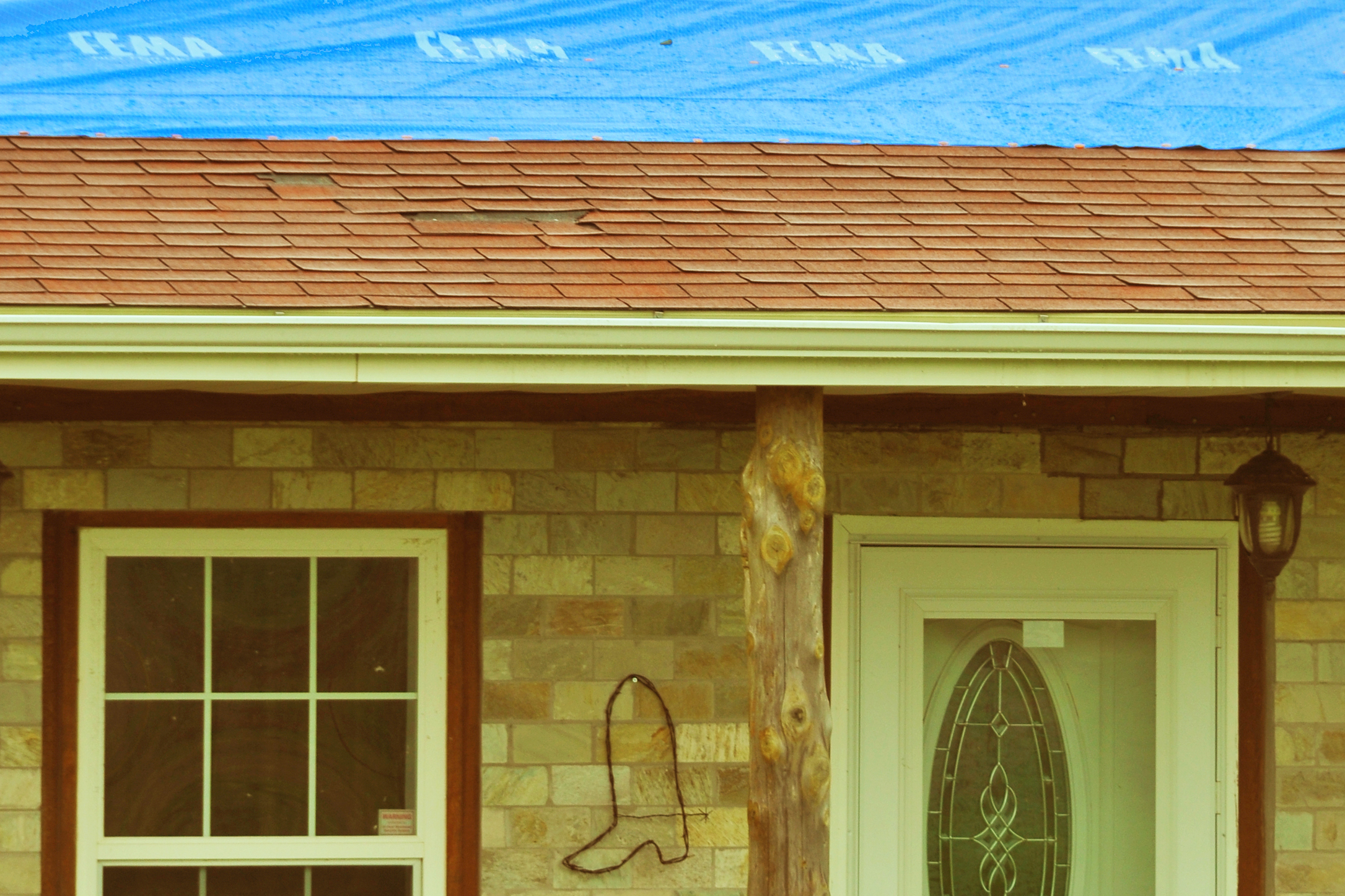
Storm damage often starts with a tarp and weatherproofing—not a full remodel drawing set.
Stabilize First, Then File: How Several Cities Clock the Notice
The pattern is consistent even when the exact deadlines differ: deal with the danger, then get the paperwork in on a short business-day timeline. Do not invent a grace period your city never published. Here are clocks taken from official pages:
- New York City. Licensed contractors may perform emergency work before a permit is issued if an Emergency Work Notification is filed with DOB within two (2) business days after the work is completed. The notification must describe the emergency and the actions taken to repair the hazard.
- Chicago. A permit application covering the emergency work must be submitted to the Department of Buildings on the next business day. The applicant must work diligently to obtain the permit. Emergency work may not be concealed without a city building inspector’s approval. If scaffolding that needs a permit goes up on an emergency basis, the scaffolding permit application is due within 3 business days. Chicago’s Section 14A-4-401 does not waive Construction Codes—only the requirement to obtain the permit before starting that emergency work.
- Grandview, Texas. When an emergency exists (immediate risk to life, health, safety, or property), necessary work may proceed immediately without prior permit issuance. The contractor or homeowner is expected to submit the city’s emergency repair form as soon as practicable, but no later than the next business day. The city follows up for review and any required inspections. For storm-related repairs, submission of that form is required to be eligible for consideration of a permit fee waiver when staff confirms the work resulted from a qualifying weather event.
- Honolulu (City and County), Department of Planning and Permitting. On DPP’s storm-response guidance, eligible emergency repair work may commence without a building permit if a permit application is submitted on the next working day after work begins. Conditions stated by the city include: the work must not expand the size, height, or area of the structure; repairs must not make the structure less safe than before the damage; materials must be similar to the original construction; and the work must comply with applicable city ordinances and building-code safety requirements. Applications go through HNL Build. DPP encourages licensed contractors.
- Prince George’s County, Maryland (DPIE). After disasters such as fire, flooding, explosion, hurricane, tornado, or blizzard, temporary securing (tarps, board-up, removing loose/hazardous material and debris) may proceed without a permit under Subtitle 4. When the work moves into items that need permits—such as removing and replacing waterlogged drywall (demolition permit) or installing structural supports for emergency stabilization (building permit)—those applications must be filed within three (3) business days after the emergency work, with the DPIE damage report attached. DPIE states it will issue those demolition or building-stabilization permits in five (5) business days, and permanent repair permits with a complete plan set in ten (10) business days. Those are County-stated process times for that emergency path—not universal U.S. timelines.
- Milpitas, California (Office of Building Safety handout). Where equipment replacement and repairs must be performed in an emergency situation, the permit application shall be submitted within the next working business day to the permit center. That wording tracks California Building Code emergency-repair language used by many California AHJs.
Notice what these rules share: a short filing clock measured in business or working days, continued code compliance, and follow-up inspection. They do not say “finish the whole house and tell us next year.”

A leak that saturates ceilings and finishes is exactly the kind of hazard emergency rules are written for—stabilize and dry in, then get the permit track moving.
New York City handles emergency work under its own DOB rules; see the emergency work section of our New York City building permits guide.
What You Can Often Secure Without a Full Remodel Permit
Temporary securing is not the same as permanent reconstruction. Prince George’s County’s emergency-repair page is unusually clear about what temporary securing can include without a permit under Subtitle 4: placing tarps on roofs; boarding up windows and doors; removing loose or potentially hazardous building material; and/or removing other debris. The County still expects you to contact Fire Prevention (Special Hazards) for a situation report and DPIE Inspections for a structural inspection and damage report, and to retain professional engineering help when temporary building stabilization is needed.
Other cities draw similar lines in practice even when the forms differ: weatherproof and make safe first; structural replacement, new electrical, new plumbing, and expanded footprints usually need the regular (or expedited emergency) permit path. Honolulu’s DPP guidance is explicit that beyond the limited emergency-repair allowance, most storm-related repair work still requires a building permit—especially structural repairs, electrical, plumbing or gas, and major reconstruction or demolition.
Always verify the temporary-securing list with your own AHJ. A tarp and plywood board-up in one county can be exempt; the same work paired with framing replacement in another may not be.

Board-up and temporary securing protect the building and the public—then the permit clock for permanent work still applies.
Temporary bracing and shoring sit in the same “make it safe now” category. NYC lists stabilizing unsafe structural conditions as classic emergency work. Chicago allows emergency stabilization before the permit, then requires the application on the next business day and forbids concealing the work without inspector approval. Prince George’s County treats installing structural supports for emergency building stabilization as permitted work that must be applied for within three business days after the emergency work, with the damage report attached. Treat lumber props and shores as temporary life-safety measures that still need a paper trail—not as a substitute for the permanent repair permit.

Temporary bracing and shoring stabilize an unsafe condition; many AHJs still expect a prompt permit application and inspection before work is concealed.
Once the hazard is under control, check how much drywall you can replace without a permit before the patch crew closes the walls.
This Is Not a Stop-Work Order—and Not the Flood 50% Rule
Homeowners often mash three different legal ideas together. Keep them separate:
- Emergency repair / emergency work (this article) is a limited permission to start hazard-driven work before the usual permit is issued, followed by a short notice or application deadline. You are cooperating with the code process under published emergency rules.
- A stop-work order is the opposite signal: the department is telling you to halt cited construction until they say you may resume. Keep working against a stop-work and you can stack penalties. If a placard is already on your job, follow the first-48-hours path in our stop-work order guide—do not treat emergency-repair language as a way to ignore a posted order.
- The flood-zone substantial improvement / “50% rule” is a National Flood Insurance Program and local floodplain trigger about cumulative improvement cost relative to market value in mapped flood zones. It can force elevation or other floodplain requirements on a remodel. It is not the same clock as an emergency-work notification. For that path, see our flood zone remodel and substantial improvement guide.
If emergency work already happened without the required follow-up filing, you may land in after-the-fact or investigative permitting—different fees and more scrutiny. That path is covered in after-the-fact building permits.
Who Should Do the Work
Emergency rules often assume a licensed contractor—not a random weekend crew. NYC’s emergency-work language is written for licensed contractors filing an Emergency Work Notification. Grandview’s page addresses licensed contractors and homeowners who notify the city. Honolulu’s DPP storm guidance encourages licensed contractors for repair work. Chicago still requires compliance with Construction Codes and, where applicable, lead-safe and asbestos-safe practices and related public-health filings.
For homeowners: call your AHJ or the on-call number your city publishes for after-hours emergencies, ask who may perform emergency work, and ask which form or portal starts the next-day filing. The general application sequence for ordinary permits is in how to apply for a building permit; emergency paths usually piggyback on the same systems with a shorter clock and a damage or emergency description attached.
Homeowner Checklist After the Hazard Is Controlled
- Make people safe first. Shut water or gas if needed, keep everyone out of collapse zones, and call 911 for active gas, fire, or life-safety emergencies.
- Document the condition. Timestamped photos and short video of the damage before and after temporary securing help insurance and the building department.
- Call your AHJ the next business morning (or sooner if they publish an emergency line). Ask whether your work qualifies as emergency repair, which form to file, and the exact deadline.
- File on time. Use the city’s stated clock—next business day, next working day, two business days after completion, three business days after stabilization, or whatever your AHJ published. Do not guess.
- Describe the emergency and what you did. NYC’s notification explicitly requires a description of the emergency and actions taken. Other cities expect a clear scope of the emergency work on the application.
- Do not conceal work that needs inspection. Chicago’s rule is a useful reminder: emergency work may not be concealed without inspector approval. Leave bracing, opened walls, or replaced systems visible until told otherwise.
- Separate temporary securing from permanent repairs. Tarps and board-up are not the finish line. Permanent structural, electrical, plumbing, and finish work usually need their own permits, plans, and finals. Prep for those inspections with building permit inspection prep.
- Keep the paper trail for insurance, sale, and refinance: emergency notice or application, issued permit numbers, inspection results, and closed/final status in the portal.
Late filing and emergency equipment repairs
Two published rules show what the “file afterward” promise really requires:
| City | Rule | If you miss it |
|---|---|---|
| Salt Lake City | Emergency work is allowed when it was urgently necessary and getting a permit first was not practical; a permit must be obtained as soon as practical, generally the next day | An unreasonable delay is charged a double fee; work found without a permit can get a stop-work red tag, a citation, and a Certificate of Noncompliance on the title |
| Tampa | When equipment repairs must be done in an emergency, the permit application goes to the building official within the next working business day (City Code 5-105.2.1) | Work that needs a permit must still pass a final inspection |
Sources: Salt Lake City Building Services FAQs; Tampa Construction Services FAQ.
Fire-damaged homes follow a different path; see our fire damage repair permit guide.
FAQ
What if I wait too long to file after an emergency repair?
In Salt Lake City, an unreasonable delay in getting the permit after emergency work means a double fee.
Does an emergency water heater or A/C swap need a permit?
Usually yes, filed right after. Tampa requires the application within the next working business day for emergency equipment repairs.
Bottom Line
When a leak, storm, or unsafe condition threatens people or the building, many U.S. cities let you stabilize first and file soon after—on clocks measured in business days, not months. That emergency path is a narrow, code-bound exception. It is not permission to expand the house, hide work from inspectors, ignore a stop-work order, or skip floodplain rules. Use the official pages below as worked examples, then match the process to your own building department before the temporary tarp becomes a permanent unpermitted remodel.
Last checked: October 31, 2026.
Official Sources
- NYC Department of Buildings — Do I Need a Permit? (AC 28-105.4.1 emergency work; Emergency Work Notification within two business days after completion; example emergency scopes)
- City of Chicago DOB — Emergency Repair or Stabilization Work (next-business-day permit application; scaffolding within 3 business days; no concealment without inspector approval; Section 14A-4-401; code compliance still required)
- Prince George’s County, MD — Emergency Repair Authorization Process (temporary securing without permit; 3-business-day applications for certain emergency permits; County-stated 5- and 10-business-day issuance targets)
- City of Grandview, TX — Emergency Repair Permit (work may proceed immediately; form due no later than next business day; storm-related fee-waiver consideration tied to the form)
- City and County of Honolulu DPP — Storm Response FAQs (emergency repair may commence without permit if application filed next working day; size/height/area, safety, similar materials, and code conditions)
- City and County of Honolulu DEM — Storm Recovery Information (same emergency-repair permitting summary for storm recovery)
- City of Milpitas, CA — Permits Not Required and Emergency Repairs (emergency repairs: permit application within the next working business day)
PermitCove is an independent guide for homeowners, not a government agency and not a substitute for your local building department. Always confirm permit requirements, filing deadlines, licensing, and inspection sequencing with your AHJ before starting work.


Comments
Post a Comment